
January 16, 2026
How Can an OEM Checkout Counter Factory Slash Your Store Setup Costs Without Cutting Corners?
Why Retailers Suddenly Care About the OEM Route
Walk any trade-show aisle from Chicago to Guangzhou and you’ll hear the same buzzword bouncing around like a beach ball: oem checkout counter factory. Retailers who once splurged on branded fixtures are now quietly asking, “Wait—why am I paying a 40 % markup for the same steel and plywood?” The answer is simple: an OEM partner strips away the middle-layer brand tax, letting you pay for raw performance, not a fancy logo. But before you jump on the first Alibaba link that pops up, let’s unpack what “OEM” really means in the checkout-counter game.
So, What Exactly Is an OEM Checkout Counter Factory?
OEM stands for Original Equipment Manufacturer. In plain English, these factories build counters to your spec, slap your logo on them, and never claim credit in public. Think of them as the ghost-writers of retail fixtures: they craft the story, you publish it under your name. The key advantage? Every shelf height, every cable port, every RGB light strip is engineered for your store concept, not for a mass market that will never set foot in your space.
Cost Breakdown: Where the Savings Really Hide
Let’s crunch real numbers. A branded “Swiss-looking” counter from a European supplier lands at roughly $2,800 per lane once you add import duty and freight. Approach an oem checkout counter factory in northern China with the same technical drawing, and the EXW price floats around $1,150. Same stainless grade, same load capacity, same powder-coat thickness—heck, even the same anti-fingerprint coating. The delta? Mostly marketing budgets and regional sales offices. Swap the branded cash-drawer unit for an OEM-spec model and you shave another $180 without touching reliability. Multiply that across a 30-lane hypermarket, and you’ve just funded an entire year of loyalty-program giveaways.
But Will Quality Slip Through the Cracks?
Short answer: only if you skip the homework. Top-tier factories run ISO-9001 systems and let third-party QC firms like SGS or TÜV poke around unannounced. Ask for the last five audit PDFs—if they hesitate, run. Another pro tip: insist on a golden sample. This single fully assembled counter acts as your North Star; every bulk shipment gets checked against it, not against a blurry photo on WeChat. Do this right and failure rates drop below 0.3 %—that’s half what some domestic European plants accept.
The 5-Step Roadmap to Vet an OEM Partner
- Request a VR factory tour. Serious players have 360° cams on the shop-floor; if they can’t beam you in, they’re probably traders, not manufacturers.
- Ask for a component BOM (bill of materials). You’ll spot cost-savings tricks—like swapping 0.8 mm steel for 1.0 mm—before you sign anything.
- Negotiate IP protection. A one-way NDA is cute, but a bilateral NNN (Non-Use, Non-Disclosure, Non-Circumvention) enforceable in Chinese courts is bulletproof.
- Book a small trial order of 5–10 units. Monitor them in your highest-traffic store for 90 days; nothing reveals weak welds faster than teenage cashiers slamming drawers.
- Lock spare-part prices for three years. Sounds nerdy, but when a single barcode-scanner bracket goes obsolete, you’ll thank me for avoiding a $110 replacement fee.
Hidden Customization Gems That Drive Shopper Loyalty
Most retailers think customization ends at color. Big mistake. A nimble oem checkout counter factory can integrate:
- Wireless-charging pads molded right into the countertop—customers top-up their phones while queuing, reducing perceived wait time.
- Modular bag-trolley hooks that fold flush when not needed, widening the lane for wheelchair users (and keeping you ADA compliant).
- Swap-in acrylic panels for seasonal campaigns—Halloween orange in October, festive red in December—without changing the entire counter.
These tweaks cost peanuts in Asia—roughly $4–$9 per feature—but they create Instagram moments that no big-box competitor can copy quickly.
Timeline Reality Check: From CAD to Grand Opening
Expect 45–60 days for metal fabrication plus 14 days for sea freight to North America. Add a 7-day buffer for U.S. customs exams, and you’re looking at 11 weeks door-to-door. Sounds scary? Compare that with 16-week lead times quoted by domestic mill-work shops who “promise” quicker freight but end up sanding wood in your parking lot. Pro tip: time your PO so the ship sails after Chinese New Year but before April factory queues peak—rates dip about 8 % in that sweet spot.
Compliance You Can’t Ignore: UL, NSF, and the Rest of the Alphabet Soup
Even the slickest oem checkout counter factory can’t read your local inspector’s mind. In California, counters need NSF certification if they touch food (think in-store bakery checkouts). In New York City, electrical enclosures require ETL-listed power strips. Ask your supplier to bundle certification into the FOB price—retrofitting on arrival can triple costs faster than you can say “change order.”
Isn’t Communication a Nightmare Across Time Zones?
Not anymore. Many Tier-1 factories now staff fluent project managers in your time zone—often expats who’ve worked at Target or Carrefour. They’ll hop on Zoom at 9 p.m. Shanghai time so you can review drawings over morning coffee. And hey, if they reply to your first RFQ within 30 minutes, that’s a solid hint they’re hungry (and organized).
Sustainability Angle: Can OEM Be Green?
Absolutely. Ask for powder-coat lines with zero-VOC reclaim systems and solar-powered workshops. One Suzhou plant we audited runs 60 % renewable energy and ships counters in flat-pack form—cutting container volume by 28 %, which lops a hefty chunk off CO₂ emissions. Bonus: smaller cube equals lower freight, so your CFO and your sustainability officer finally agree on something.
Final Thought: Are You Ready to Own the Process?
Partnering with an oem checkout counter factory isn’t a back-alley shortcut; it’s a strategic move that hands you the design keys, the cost ledger, and the timeline stopwatch—all at once. Do your audits, lock your specs, and you’ll walk away with counters that look boutique-label but cost private-label. And remember, in retail every dollar you save at the fixture level is a dollar you can spend on customer experience—the stuff that actually keeps shoppers coming back.
Hot Product
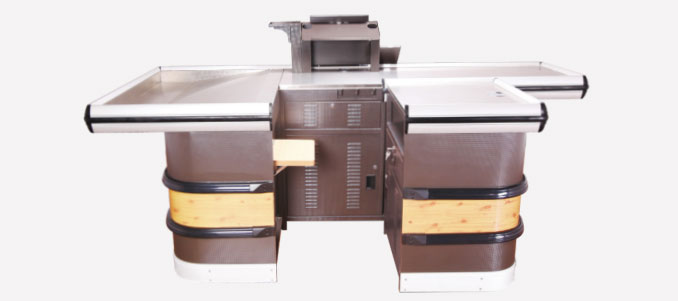
GYF-090 Luxury Checkout Counter
admin2025-07-01T05:40:44+00:00July 1, 2025|0 Comments
Product Overview The GYF-090 Luxury Checkout Counter offers a balanced combination of elegance, durability, and smart spatial design. With a reference size [...]
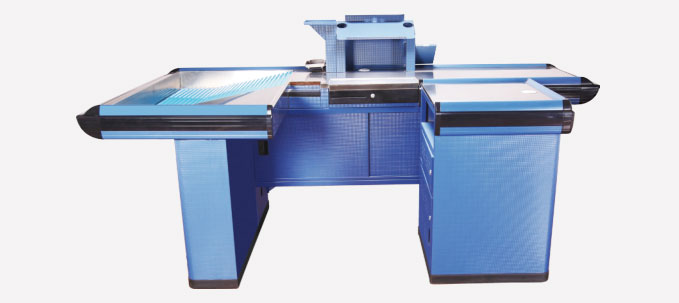
GYF-089 Luxury Checkout Counter for Supermarket
admin2025-07-01T03:58:41+00:00July 1, 2025|0 Comments
Product Overview The GYF-089 Luxury Checkout Counter is a premium, full-size cashier desk designed for high-traffic supermarkets, hypermarkets, and retail chains. With [...]
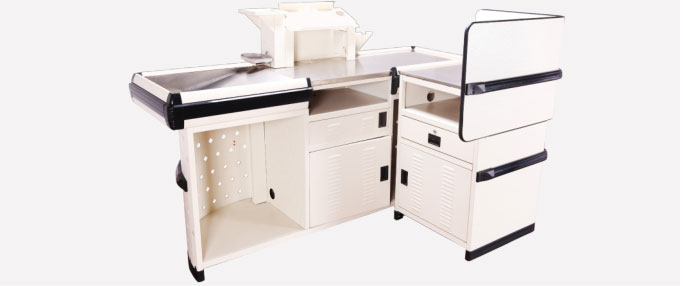
GYF-088 Custom Luxury Checkout Counter
admin2025-07-01T03:50:22+00:00July 1, 2025|0 Comments
Product Overview The GYF-088 Luxury Checkout Counter is a flagship solution for retailers seeking an elegant, durable, and highly customizable front-end cashier [...]
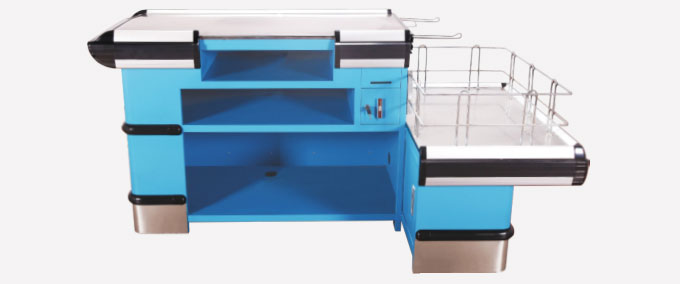
GYF-087 Luxury Checkout Counter
admin2025-07-01T03:27:20+00:00July 1, 2025|0 Comments
Product Overview The GYF-087 Luxury Checkout Counter offers a compact yet premium solution for modern retail stores. With dimensions of 1600 × [...]
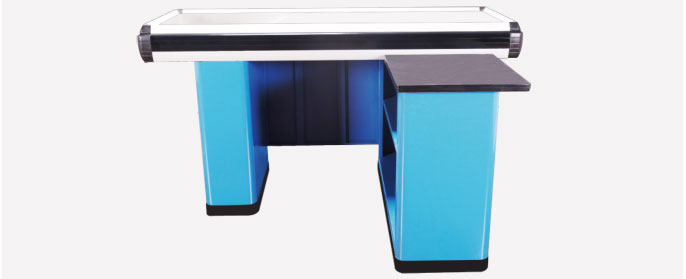
GYF-086 Luxury Checkout Counter
admin2025-07-01T03:17:16+00:00July 1, 2025|0 Comments
Product Overview The GYF-086 Luxury Electric Checkout Counter is designed to provide a perfect blend of modern design, space efficiency, and durability. [...]