
January 23, 2026
How Does the Right Checkout Counter for Supermarket Boost Sales and Customer Loyalty?
Why Shoppers Judge Your Store by the Last 30 Feet
Picture this: a customer has cruised through every aisle, tossed organic snacks and laundry pods into the cart, and now they hit the final stretch—the checkout lane. In retail psychology this zone is called the “decompression delta,” and it’s where memories are cemented. A sleek, well-lit checkout counter for supermarket can turn a routine payment into the emotional cherry on top, while a clunky, narrow belt screams frustration. If the last impression is sour, the stellar merchandising you invested in moments earlier evaporates. That is why forward-thinking chains treat the counter as a profit engine, not an afterthought.
The Anatomy of a Modern Checkout Counter for Supermarket Operations
Before we dive into ROI, let’s unpack the pieces. At minimum, a modern unit contains:
- Ergonomic scanner deck: dual-laser or vision-based, angled at 15° to cut wrist fatigue.
- Integrated bagging tunnel: with rotating carousel to keep queues moving.
- Payment cradle: supporting NFC, chip, and the inevitable “Oops, left my wallet—can I Apple Pay?” moment.
- Customer-facing screen: upsells loyalty points and digital coupons in real time.
- Under-counter cable raceway: hides spaghetti wiring and slashes cleaning time.
Each component is modular; you can add a scale for produce, a gift-card dispenser, or even a cold-plate surface for ice-cream protection during summer peaks. The point? Choose a counter that grows with your promotional calendar rather than boxing you in.
Space Planning: How Many Metres Do You Really Need?
A rookie mistake is measuring the footprint of the counter only. You must factor in the adjacent “bullpen,” the area where trolleys jockey for position. Retail consultants at GroceryTech Expo 2023 recommend a 2.2 m queue depth per active lane during peak hours. Miss that, and shoppers start the dreaded lane-switch shuffle, slowing throughput by up to 18 %. The sweet spot is a 5.8 m lane length including the bagging area, but hey, if your site is a cosy 3 000 sq ft urban box, you can trim to 4.6 m by installing a next-belt carousel. The takeaway: model traffic on Tuesdays and Saturdays; grocery karma changes fast.
Self-Checkout vs. Hybrid Lanes: Which Model Maximises Profit?
Roll your eyes if you will, but the data is crystal. IHL Research shows that a hybrid zone—four self-serve pods flanked by one attended lane—lifts gross margin 2.7 % in stores under 25 k SKUs. Why? Because the lone staffed lane handles produce lookups and age-restricted wine, while the DIY pods crush basket sizes under 12 items. Customers feel empowered, and you reallocate labour to the deli where upsell margins are juicier. Bottom line: install self-checkout first, then layer in AI vision to remove the pesky “unexpected item” alert. Your shoppers will thank you—well, they won’t tweet about you, which is basically the modern equivalent of a thank-you card.
Material Science: Why Polypropylene Beats Stainless for High-Volume Chains
Stainless looks Instagram-ready, yet it dents and shows smudges faster than a toddler’s T-shirt. Food-grade polypropylene with nano-silver ions, on the other hand, resists citrus acid etching and can be steam-cleaned in under three minutes. During flu season you can slap on an anti-microbial film without voiding warranties. Translation: lower replacement cycle, fewer call-outs for your maintenance squad, and a counter that still gleams when health inspectors pull the surprise pop-in.
Checkout Counter for Supermarket Merchandising: 5 Hot Zones You Aren’t Using
Think beyond candy bars. Here are under-leveraged pockets that turn idle time into micro-sales:
- Queue TV rail: 15-second recipe clips push canned tomato sales up 9 %.
- Hand-sanitiser clip-strips: impulse-buy hero in the post-pandemic era.
- Reusable bag hooks at knee level: parents spot them while kids nag, raising basket size.
- Receipt-print promos: QR code for tonight’s dinner kit—reduces unsold chicken by 4 %.
- Pin-pad sleeves: swap monthly; seasonal graphics nudge gift-card purchases.
One Midwest retailer netted an extra $42 k per store annually just from zone 4. Not chump change.
Tech Integration: From POS to ESL in One Cable
Modern supermarkets juggle price updates across thousands of SKUs. A smart counter hides a PoE++ switch that powers both the register and adjacent electronic-shelf-label (ESL) bridges. When headquarters drops a 2-for-1 avocado promo, the label flashes red within 30 seconds, and the cashier’s screen auto-suggests guacamole kits. The result? Promo compliance jumps to 96 %, and shrink from price mis-matches plummets. If you are still sending staff down aisles with sticker guns, you are, to be blunt, living in the stone age.
ROI Checklist: Will the New Counter Pay for Itself?
Finance chiefs love hard numbers. Run these quick equations:
- Throughput gain: (Seconds saved per basket) × (Baskets per hour) × (Labour cost per hour).
- Upslift: (Incremental margin from zone 1–5 items) × (Average daily transactions).
- Maintenance delta: (Old yearly repair cost) − (Projected cost with polypropylene).
Most chains hit break-even in 14 months. One regional player recouped in 9 months after slashing queue times during football season—fans in a hurry to grab brews embraced self-serve pods like they were touchdowns.
Installation Pitfalls: Permits, Plumbing, and the “One-Millimetre” Rule
City inspectors may demand wheelchair-turning radius proof; submit CAD drawings early. Also, leave a 1 mm thermal gap between metal and plastic edges—summer expansion has cracked many a counter top. And, hey, don’t forget the under-counter heater for chocolate bars; nobody likes a bloomed candy bar (even though it still tastes fine, it looks weird). Lastly, test your foot-rail height—cashiers come in all sizes, and a mis-positioned rail can spark a repetitive-strain claim that dwarfs the counter’s price tag.
Future-Proofing: What’s Next After Mobile Scan-and-Go?
Amazon’s palm-pay and Elon-ish neural wallets aside, the next leap is vision-only exit. Shoppers walk through a gantry; cameras ID the cart, and payment auto-charges. The catch? Regulators want visible transparency. Expect hybrid counters to pivot into “help stations” stocked with fresh coffee vouchers for anyone the AI flags—humanity still outsells algorithms. If you spec extra conduit now, you won’t be ripping up tiles when the tech lands.
So, circling back to the big question: how exactly does the right checkout counter for supermarket fatten the bottom line? It speeds throughput, sprinkles micro-impulse sales, slashes cleaning hours, and primes your floor for whatever sci-fi payment method Gen Z invents next. Ignore it, and you’re pouring marketing dollars into a leaky bucket; invest smart, and the last 30 feet become the most lucrative real estate in your whole store.
Hot Product
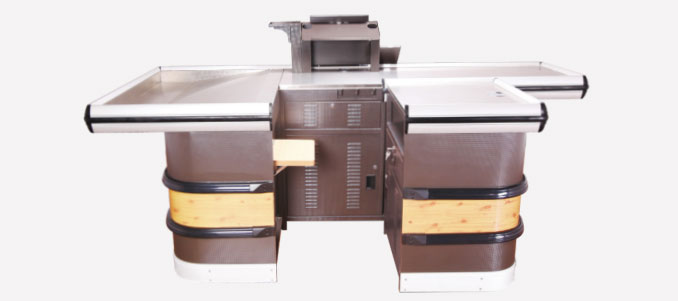
GYF-090 Luxury Checkout Counter
admin2025-07-01T05:40:44+00:00July 1, 2025|0 Comments
Product Overview The GYF-090 Luxury Checkout Counter offers a balanced combination of elegance, durability, and smart spatial design. With a reference size [...]
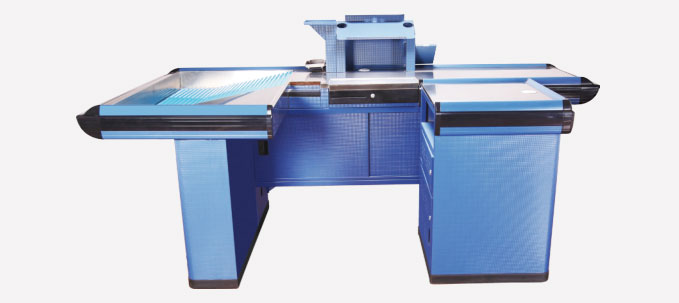
GYF-089 Luxury Checkout Counter for Supermarket
admin2025-07-01T03:58:41+00:00July 1, 2025|0 Comments
Product Overview The GYF-089 Luxury Checkout Counter is a premium, full-size cashier desk designed for high-traffic supermarkets, hypermarkets, and retail chains. With [...]
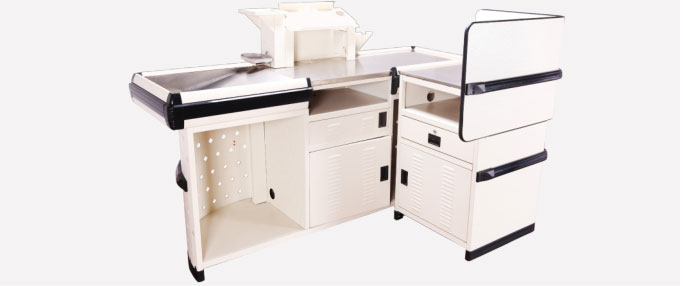
GYF-088 Custom Luxury Checkout Counter
admin2025-07-01T03:50:22+00:00July 1, 2025|0 Comments
Product Overview The GYF-088 Luxury Checkout Counter is a flagship solution for retailers seeking an elegant, durable, and highly customizable front-end cashier [...]
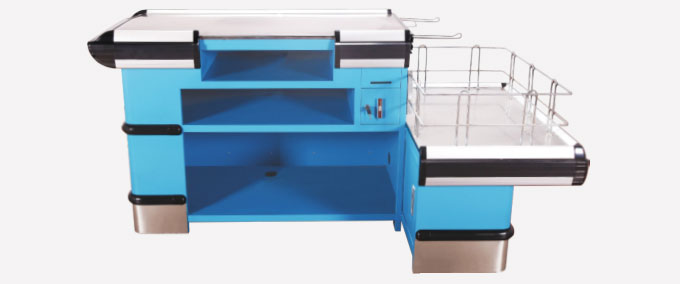
GYF-087 Luxury Checkout Counter
admin2025-07-01T03:27:20+00:00July 1, 2025|0 Comments
Product Overview The GYF-087 Luxury Checkout Counter offers a compact yet premium solution for modern retail stores. With dimensions of 1600 × [...]
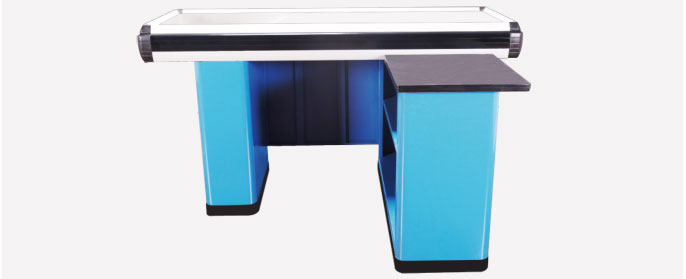
GYF-086 Luxury Checkout Counter
admin2025-07-01T03:17:16+00:00July 1, 2025|0 Comments
Product Overview The GYF-086 Luxury Electric Checkout Counter is designed to provide a perfect blend of modern design, space efficiency, and durability. [...]