Why Floor Space Is the New Currency in Retail
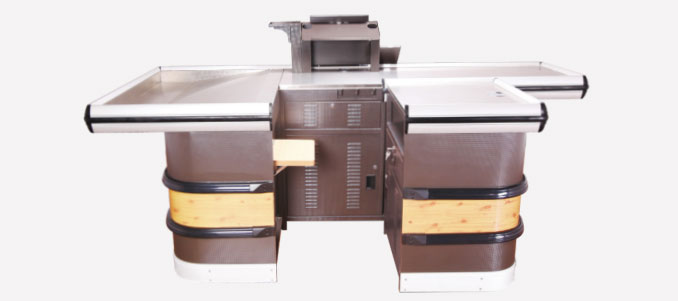
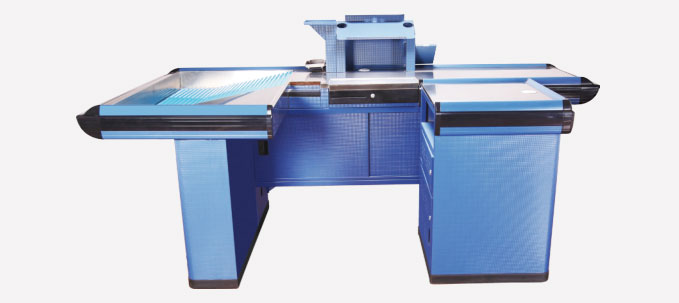
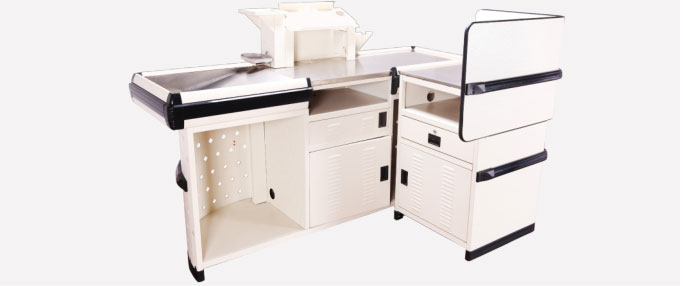
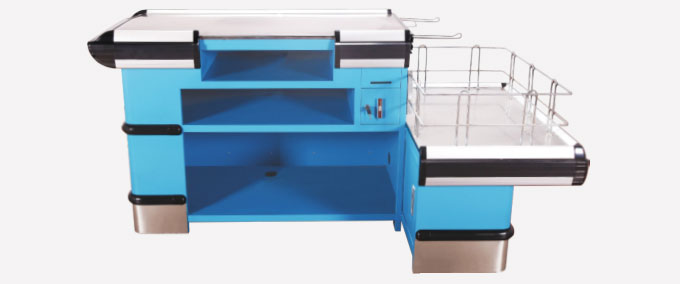
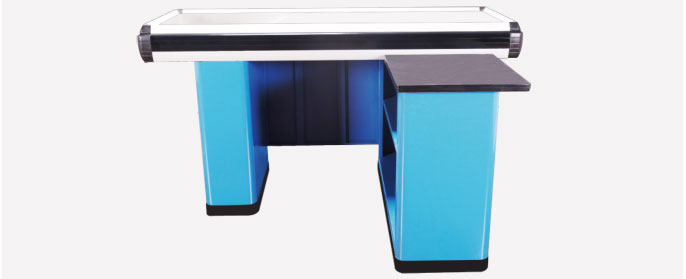
Every square foot in a modern store has to earn its keep. If a fixture can’t convince shoppers to linger—or better yet, spend—it quickly turns into dead money. That’s precisely why the phrase oem small checkout counter is trending on procurement dashboards from Toronto to Taipei. Buyers aren’t just hunting for “small”; they’re hunting for small that still sells. Let’s unpack how an OEM approach can squeeze revenue out of the tiniest footprint without making the space feel like a budget airline cabin.
What Exactly Does “OEM” Mean in the Checkout World?
Original Equipment Manufacturer, or OEM, simply means the unit is built by the same factory that produces for global brands, but it ships without the logo—or with yours. Translation: you get the identical structural integrity, cable-management tricks, and modular add-ons as the big-box giants, minus the 30 % brand tax. When you pair that with a small checkout counter, you’re essentially buying a Swiss-army register stand that can morph into a loyalty kiosk, an impulse-buy magnet, or a click-and-collect window whenever you need.
Size Isn’t Just a Dimension—It’s a Strategy
A 60 cm-wide counter can feel palatial if the side panels fold out into bag-staging wings. Conversely, a 120 cm behemoth becomes useless if it blocks fire exits. The sweet spot? OEM factories now laser-cut steel at ±0.1 mm tolerance, so you can order a oem small checkout counter that is exactly 81.5 cm wide—perfect for that awkward pillar you never knew how to monetize. And yeah, you can spec it in millimeters, not just “small, medium, large.”
Hidden Revenue Tricks Built Into the Frame
Most retailers still treat checkout as a necessary evil; smart ones treat it as the final aisle. A well-designed OEM counter hides:
- a 5° sloped insert that angles candy toward the customer’s hand—no plexiglass rattle;
- a magnetic strip under the receipt printer for last-second battery sales;
- a flip-top cash drawer that doubles as a mini billboard when closed.
One European pharmacy chain saw a 7.3 % uptick in basket size after swapping generic MDF counters for OEM units with these micro-features. Not too shabby for something you barely notice, right?
Customization Without the Custom Price Tag
Here’s where OEM shines like a diamond in a clearance bin. Because the factory already holds molds for 40+ laminate finishes, switching from “rustic oak” to “high-gloss midnight” adds zero tooling cost. Need a notch for your new 10-inch POS tablet? The CNC file gets tweaked overnight; you pay only for the extra 12 minutes of machine time. Try asking a boutique carpenter to match that speed without charging you a arm and a leg—good luck.
Compliance & Durability—The Two Non-Negotiables
Let’s get serious for a sec. A checkout counter must pass ADA knee-clearance in the States, EN 16121 load tests in the EU, and sometimes even seismic standards in California. OEM suppliers that already sell into Walmart or Carrefour have those certificates in a neat zip folder. Ask for them; if the vendor hesitates, run. The last thing you need is a shiny micro counter that buckles under the weight of a self-checkout screen and two gallons of milk.
Pricing Benchmarks: What Should You Budget?
Alright, the numbers. FOB Shenzhen, a basic oem small checkout counter in white laminate starts around $118 for a 1×1 m order. Add $25 if you want an aluminum kick plate, another $18 for dual USB ports integrated into the top. Air freight to New York pushes it to roughly $210 landed. Compare that with domestic fabricated units at $450+ and you’ll see why Amazon pop-up stores are shipping counters by the 40-foot container.
Quick Fire FAQ—Because Google Loves Snippets
Q: Can I assemble it myself?
Absolutely. Most OEM counters use cam-locks and color-coded dowels—think IKEA but with better instructions. Takes two people 22 minutes on average.
Q: What’s the MOQ?
Some factories accept 5 units if you agree to share a container. Others stick to 50. Always ask for a “mixed SKU” quote; they can split the container with your buddy’s shelving order.
Q: Does small mean flimsy?
Nope. The same 38 kg/m³ particleboard you find in full-size units is used; it’s just cut shorter. Static load capacity is still 200 kg, so go ahead and stock bottled water on the lower shelf.
Transitioning From “Interest” to “Order”
By now you’re probably scribbling dimensions on a napkin. Before you fire off an RFQ, map your customer flow. Place painter’s tape on the floor where you think the counter should live; run a week of A/B tests with a folding table of identical size. Measure queue length, average dwell, and staff comfort. Only then lock in your final spec sheet. Trust me, the factory won’t mind tweaking the DWG file three times—they’re used to picky clients like us.
Key Takeaway—Shrink the Counter, Not the Experience
An oem small checkout counter isn’t just a space-saving hack; it’s a silent salesman that works every shift without coffee breaks. Specify smart add-ons, insist on certified build quality, and you’ll turn that awkward corner beside the exit into the most profitable real estate in your store. Ready to measure twice and profit thrice?