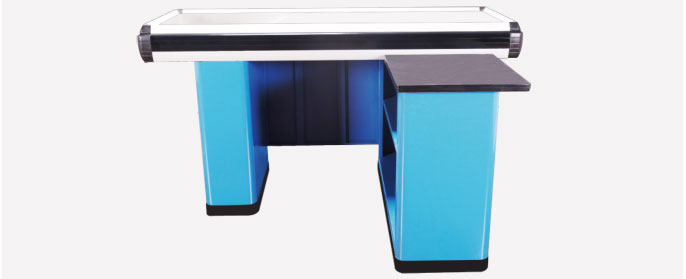
Why Retailers Suddenly Talk About OEM Cashier Counters
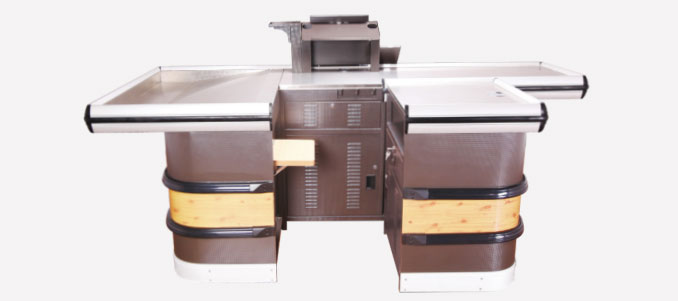
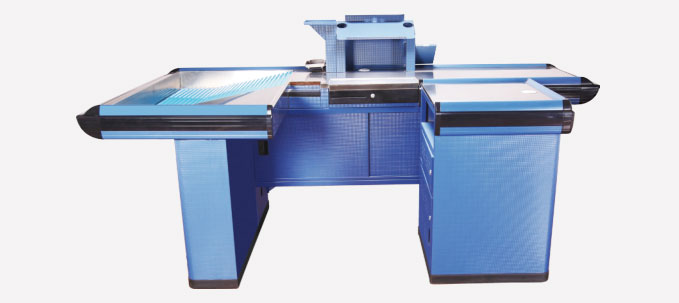
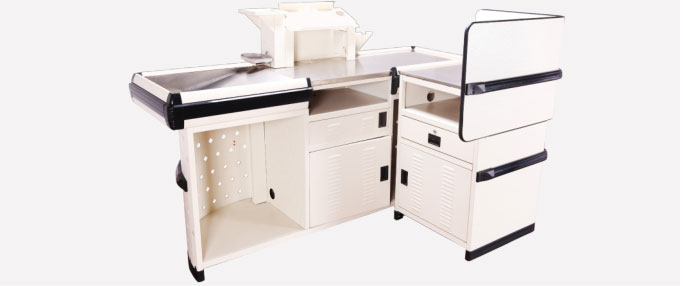
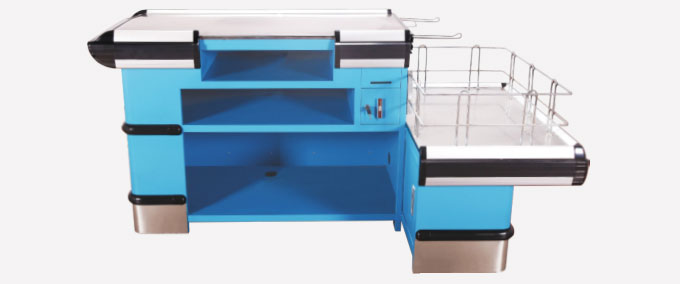
Walk any trade-show floor this year and you’ll hear the same buzzword: oem cashier counter. It’s not just furniture anymore—store planners treat it as a silent profit lever. But why the hype, and more importantly, can it really shrink the ever-growing “cost of doing business” line on your P&L?
What “OEM” Actually Means in Checkout Hardware
Original Equipment Manufacturer (OEM) implies the supplier both designs and produces the unit, skipping pricey middle layers. Translation: you get a tailor-made checkout station minus the brand-name markup. That alone drops the unit price 18-35 %, yet the bigger story hides in what happens after the invoice is paid.
The Hidden Cash Drains of Stock Checkout Stands
Generic counters look cheap on Alibaba—until you add freight, import duty, and the cost of drilling holes that don’t line up with your POS cables. A friend of mine (yeah, the guy who runs three mini-marts in Phoenix) ended up paying more per square foot for a “bargain” stand than for a custom oem cashier counter once install labor was counted. Add in replacement parts that only one wholesaler stocks, and you’re chained to whatever price they wake up wanting.
5 Ways an OEM Cashier Counter Pays for Itself
1. Footprint Flexibility = Higher Sell-Through
Because the factory laser-cuts the counter after your CAD drawing, every impulse-buy hook and candy shelf sits exactly where heat-map data says it converts best. A 7 % uplift in basket size is common; in a 600-transaction-day store that’s an extra $50 k a year—not bad for a piece of metal, right?
2. Modular Steel Cuts 12-Year Replacement Cycles to 6
OEMs that cater to supermarkets spec 1.5 mm galvanized steel, powder-coat baked at 200 °C. The stuff shrugs off daily bleach wipe-downs. Stores swapping counters every six years instead of twelve save roughly one full replacement budget over a decade.
3. Built-In Cable Management Reduces IT Tickets by 28 %
Raised raceways and removable back panels mean your tech team finishes installs in 45 min, not half a shift. Fewer “card reader keeps going offline” calls equals happier customers and lower overtime.
4. Ergonomic Height Drops Cashier Fatigue Claims
An adjustable deck (950 mm–1050 mm) lets workers of any stature keep elbows at 90°, trimming repetitive-stress claims. One Midwest grocery chain saw worker-comp premiums fall $34 k store-wide the year after retrofitting 22 lanes with oem cashier counters.
5. Brand-Consistent Aesthetics Boost Loyalty
Colours matched to your logo subconsciously remind shoppers they’re “home,” nudging repeat visits. Psychologists call it mere-exposure effect; accountants call it 5 % same-store sales lift.
Spec Sheet Cheat-Sheet: What to Lock Down Before You Quote
- Dimensions: allow 850 mm belt width per express lane, 1200 mm for full-size.
- Load rating: 250 kg distributed if you mount self-checkout screens.
- Finish: anti-fingerprint nano-coat keeps matte black looking Instagram-ready.
- Compliance: ADA / EN 12221 clearance, plus UL 962 for electrical raceways.
- Lead-time: 25-30 days FOB Shenzhen, add 14 for custom RAL colour match.
Price Benchmarks: What Real Buyers Pay in 2024
| Volume Tier |
FOB Unit Price |
Land-Cost Estimate* |
| 1-9 units |
$520 |
$960 |
| 10-49 |
$430 |
$790 |
| 50-199 |
$380 |
$670 |
| 200+ |
$320 |
$550 |
*Includes ocean, duty, drayage to inland DC.
Installation Hacks That Save a Full Day of Downtime
Ship the counter in two “knock-down” modules: base frame and top deck. Pre-install POS brackets at the factory; when the truck arrives, you only bolt four legs and drop the deck. A grocery in Texas reopened deli checkout 3.5 hours after the pallet was unwrapped—customers barely noticed the switch.
Future-Proofing: What to Specify Today for Tomorrow’s Tech
Ask the OEM to laminate an RFID antenna inside the deck; even if you don’t roll out RFID till 2027, the counter is ready. Same for inductive-charging pads for mobile scanners and hidden under-counter rails that accept tomorrow’s self-checkout brains. Retrofitting later costs triple, trust me.
Bottom Line: Is an OEM Cashier Counter Worth It?
Crunch the numbers: a $650 landed counter that lasts 10 years equals $65 per year. Stack that against one worker-comp claim, one lost day of sales, or one negative Yelp review about slow lines and the payback is obvious. So if you’re refreshing lanes this fiscal year, quit window-shopping generic catalog stands—go straight to an oem cashier counter and let the unit pay for itself in quarters, not decades. Oh, and remember to insure the shipment; nobody want a dented crate arriving right before Black Friday.