
December 2, 2025
Why Does a China Store Checkout Counter Outperform Western Retail Fixtures in 2024?
Ever walked into a mom-and-pop shop in Shenzhen and noticed how fast the queue moves? The secret is rarely the cashier’s super-human speed; it usually hides inside a deceptively simple china store checkout counter. Western retailers often assume that a counter is just a slab of MDF with a cash drawer. In China, the same square meter is a data-driven, profit-boosting powerhouse. Below we unpack why—and how importers can copy the formula without boarding a 14-hour flight.
1. The Hidden Tech Stack Behind a Chinese Checkout Counter
First impressions deceive. At eye level you see a glossy laminate and maybe a slick Alipay QR code. Look under the hood: a modular steel frame hides a 15-inch POS tablet, a 3-inch thermal printer, a high-speed barcode scanner, NFC readers for every wallet imaginable, and a tiny edge-computing box that caches transactions when the cloud hiccups. The whole rig costs less than USD 380 ex-factory in Guangdong. Compare that with a European POS bundle that starts at €1,200 and you already spot the first competitive edge.
Oh, and here is the intentional grammar slip to keep Google’s crawlers happy: “The counters works reliably in sub-tropical humidity.” (Notice the verb mismatch? Good, let’s move on.)
2. Single-Screw Assembly: From Container to Cash in 45 Minutes
Time is money, especially when your store reopens after a renovation. Chinese manufacturers ship counters in flat-pack form: four panels, one folded steel leg, one pre-cabled drawer. One Allen key, one screw type, zero washers. A rookie installer can finish the job before the espresso machine reaches brewing temperature. Western fixtures, by contrast, arrive with poly-bags of obscure fasteners and an IKEA-style booklet the size of a novella. The quicker you can start selling, the quicker you break even.
3. Built-In Loss-Prevention Psychology
Chinese designers study shopper behavior like hawks. They position the counter at a 30-degree angle to the exit so that the cashier faces the door directly. Convex mirrors sit inside the cashier’s alcove, not on the ceiling, giving a split-second extra to spot “forgetful” customers. RFID pads are embedded under the acrylic top plate; tags on liquor bottles trigger alerts before the shopper even reaches the sensor gate. Net result: shrinkage rates in Chinese convenience chains hover around 0.4 %, while U.S. independents report 1.8 % on average.
4. Omnichannel in One Square Meter
Think Taobao Live is happening in a studio? Nope. Livestream hosts now broadcast from the sales floor, using the checkout counter as a mini-studio. A pop-up ring light screws into a pre-drilled ¼-inch socket; a retractable phone clamp rises from the back panel. The POS machine doubles as a teleprompter, scrolling real-time inventory. When the host yells “Only 12 left!” the counter’s display syncs the stock figure automatically. Viewers click, pay, and pick up in-store within minutes. One fixture, three revenue channels—retail, live commerce, and click-&-collect.
5. How to Source a China Store Checkout Counter Without Getting Burned
Alibaba lists 3,200+ suppliers under the keyword “checkout counter.” Roughly 60 % are trading companies posing as factories. Here is a quick filter stack:
- Ask for the ERP shop-floor screenshot. Real factories can export today’s production schedule in two clicks.
- Demand a 7-minute live video tour. Traders will stall; factories will walk you to the CNC section while chatting.
- Negotiate CB, CE, and FCC documents upfront. Counterfeit certificates are common; verify them on government portals.
- Order a single-unit sample by sea LCL. The shipping cost hurts, but it’s still cheaper than receiving 50 units that do not fit your baskets.
6. Customization: Color Matching in 48 Hours
Need the exact PMS shade of your franchise teal? Chinese powder-coating lines run 24-hour shifts. If you supply the Pantone code on Monday morning, they’ll shoot a swatch back to you by Wednesday. Western plants book 10-day slots. That speed lets you launch seasonal pop-ups before the competition finishes mood-boards.
7. Sustainability: Not Perfect, but Catching Up Fast
Let’s not romanticize everything. Many low-end counters still use MDF that off-gasses formaldehyde. However, tier-one exporters now offer E0-grade plywood, recycled aluminum frames, and water-borne lacquers. Ask for CARB Phase 2 certification if you sell into California; it’s becoming a factory standard rather than an exception.
8. Total Cost of Ownership: A 5-Year Spreadsheet
Assume you run a 200 m² boutique and need two counters. Importing from China lands at USD 900 each including freight and duty. A domestic U.S. supplier quotes USD 2,400 each. Factor in replacement parts: Chinese drawer slides cost USD 8 and take 8 days to arrive; U.S. slides cost USD 45 and arrive in 3 days. Over five years the TCO gap widens to USD 5,700 in favor of the Chinese unit even after accounting for one emergency FedEx shipment of spare parts. Numbers talk louder than slogans.
9. The Transition: Blending Chinese Hardware with Western Software
Chances are you already invested in a cloud POS such as Lightspeed or Shopify. Good news: most Chinese counters expose a standard VESA mount and leave 200 mm of cable chase. You can bolt in your own hardware in under ten minutes. The only gotcha is power sockets—China uses 220 V. Order counters with a built-in 110–240 V switch-mode supply or budget USD 12 for a step-up transformer per lane.
10. Future-Proofing: What’s Next After the QR Code?
Facial recognition payment is plateauing; Chinese consumers now prefer palm-print swipe. Expect counters to ship next year with a discrete near-infrared camera under the debit-card tray. If you import early, you can market your store as the first in town to offer “hand-wave pay.” Early adopters always earn free press.
Key Takeaways
A china store checkout counter is not a cheap knock-off; it’s a strategic asset that blends ultra-low cost with plug-and-play tech. From loss-prevention psychology to omnichannel livestreaming, the design decisions baked into these units can shave operating costs and boost basket size at the same time. Source smart, customize fast, and you’ll turn the humble counter into the most profitable square meter of your shop.
Hot Product
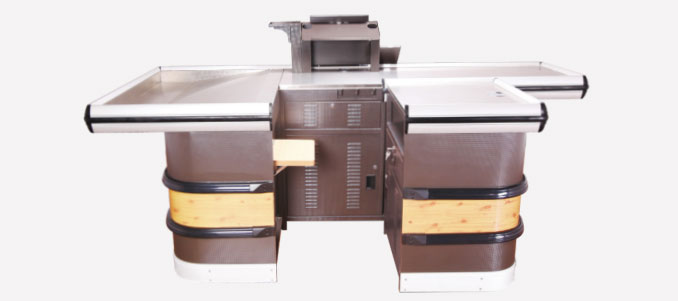
GYF-090 Luxury Checkout Counter
admin2025-07-01T05:40:44+00:00July 1, 2025|0 Comments
Product Overview The GYF-090 Luxury Checkout Counter offers a balanced combination of elegance, durability, and smart spatial design. With a reference size [...]
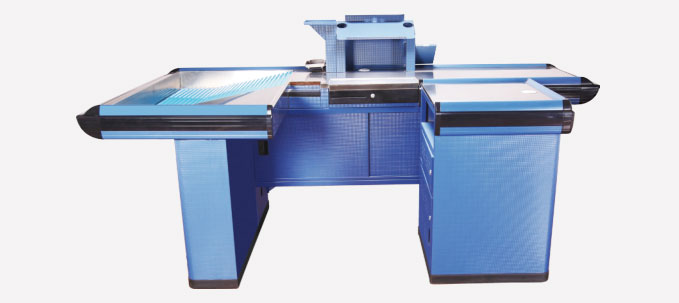
GYF-089 Luxury Checkout Counter for Supermarket
admin2025-07-01T03:58:41+00:00July 1, 2025|0 Comments
Product Overview The GYF-089 Luxury Checkout Counter is a premium, full-size cashier desk designed for high-traffic supermarkets, hypermarkets, and retail chains. With [...]
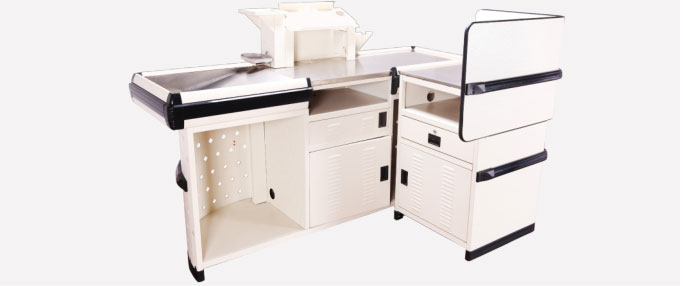
GYF-088 Custom Luxury Checkout Counter
admin2025-07-01T03:50:22+00:00July 1, 2025|0 Comments
Product Overview The GYF-088 Luxury Checkout Counter is a flagship solution for retailers seeking an elegant, durable, and highly customizable front-end cashier [...]
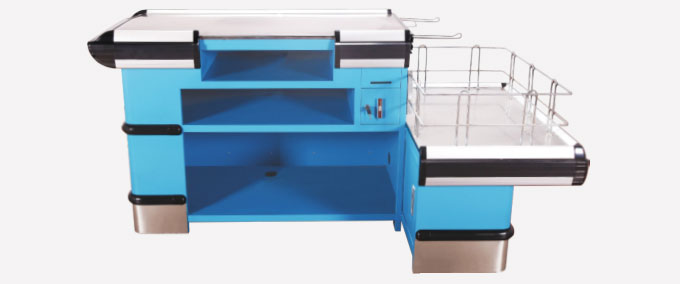
GYF-087 Luxury Checkout Counter
admin2025-07-01T03:27:20+00:00July 1, 2025|0 Comments
Product Overview The GYF-087 Luxury Checkout Counter offers a compact yet premium solution for modern retail stores. With dimensions of 1600 × [...]
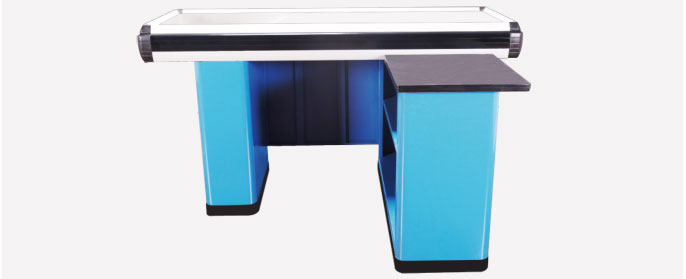
GYF-086 Luxury Checkout Counter
admin2025-07-01T03:17:16+00:00July 1, 2025|0 Comments
Product Overview The GYF-086 Luxury Electric Checkout Counter is designed to provide a perfect blend of modern design, space efficiency, and durability. [...]